Behind the Email
Looks up an email address and returns a public identity profile with name, work history, education, linked accounts, and breach exposure.

- Categories
- Email OSINTPeople SearchBreach Data
- Price
- Freemium
- Setup
- Easy to use
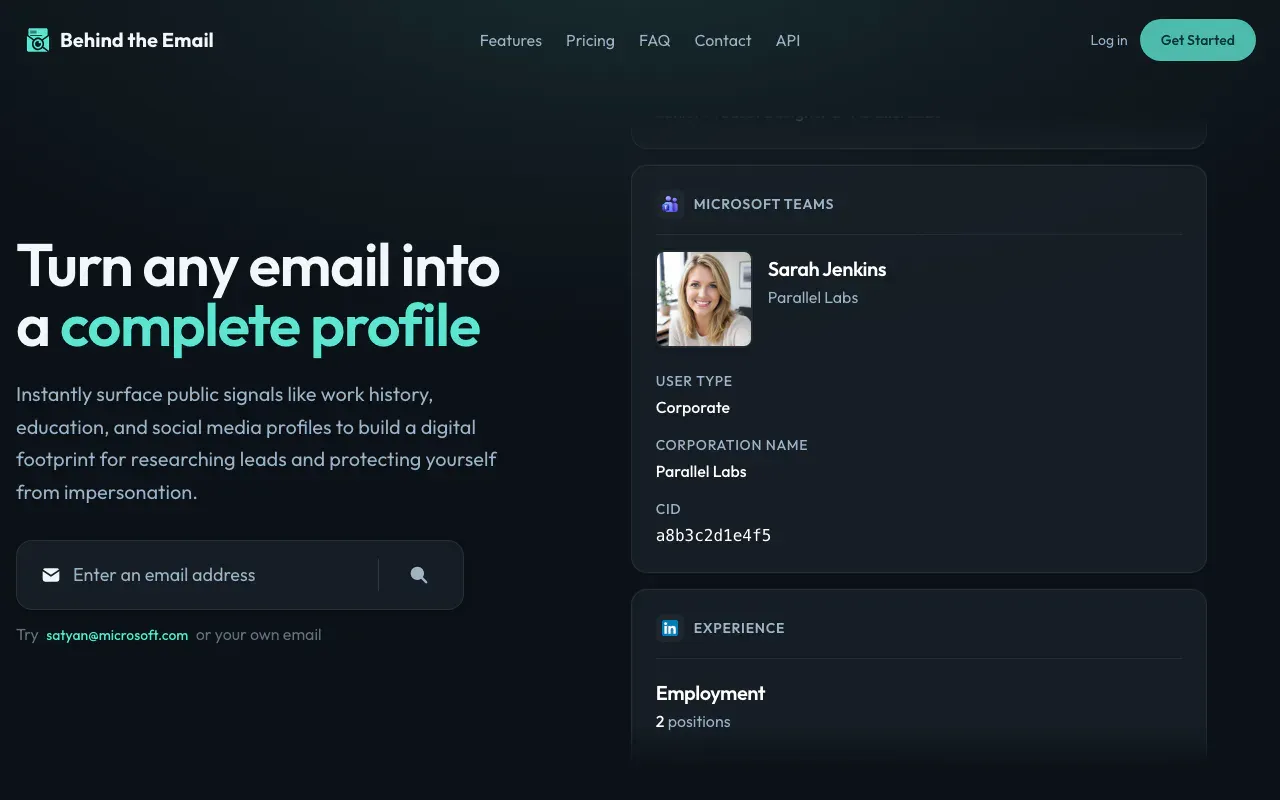
You type an email. Behind the Email tries to tell you who that address belongs to from public signals it can correlate at the time of the search. That can include a name, job history, education, location, social and service accounts, photos, reviews, registered accounts, and data-breach exposure.
There is no local install and no list of modules to babysit. You get a profile you can read, export to CSV or Excel, or pull through the REST API.
Why it is the first Gem
Most email tools answer a narrower question. Is this address registered on Instagram? Did it appear in a leak? Those answers matter. They still are not a person. This is the one I open when I need to know who I am looking at before I spend the rest of the hour.
The company says the system is conservative. It would rather miss a match than invent one. I treat that as a claim, not a guarantee, but the posture is why I trust it more than tools that pad a report with lookalikes. A clean miss is cheaper than a false name on a memo.
It is built for people who do this more than once. Bulk search, downloads, PDF reports, breach results, and the API sit behind paid plans. Plus starts at $14.99 a month for 100 searches a day and does not include the API, breach results, or bulk. Pro is $29.99. Business is $99.99. Enterprise is custom. Daily limits reset. Existing searches stay in the account.
Paying $15 to skip an afternoon of tab-hopping is the kind of trade I will make every time.
What a search actually returns
The public example is a real report for [email protected]. The homepage also offers that address as a try-it search. A full profile can include:
- a display name and current role
- employment history with dates and employers
- education
- Microsoft 365 / Teams-style workplace signals
- Google Maps photos and reviews
- social accounts such as TikTok or GitHub, with the public fields those sites expose
- a list of other registered accounts
- data-breach exposure, with first-seen and last-seen dates, on plans that include it
You can limit the API to specific providers or exclude ones you do not want. The documented search endpoint is POST /v1/search with a Bearer token.
What you get is a correlation of public sources. It is not proof of identity and not a background check. Behind the Email’s terms bar Fair Credit Reporting Act uses: employment screening, tenant screening, credit, insurance, debt collection. If a decision about someone’s job or housing hangs on the result, this is the wrong tool.
When I use it
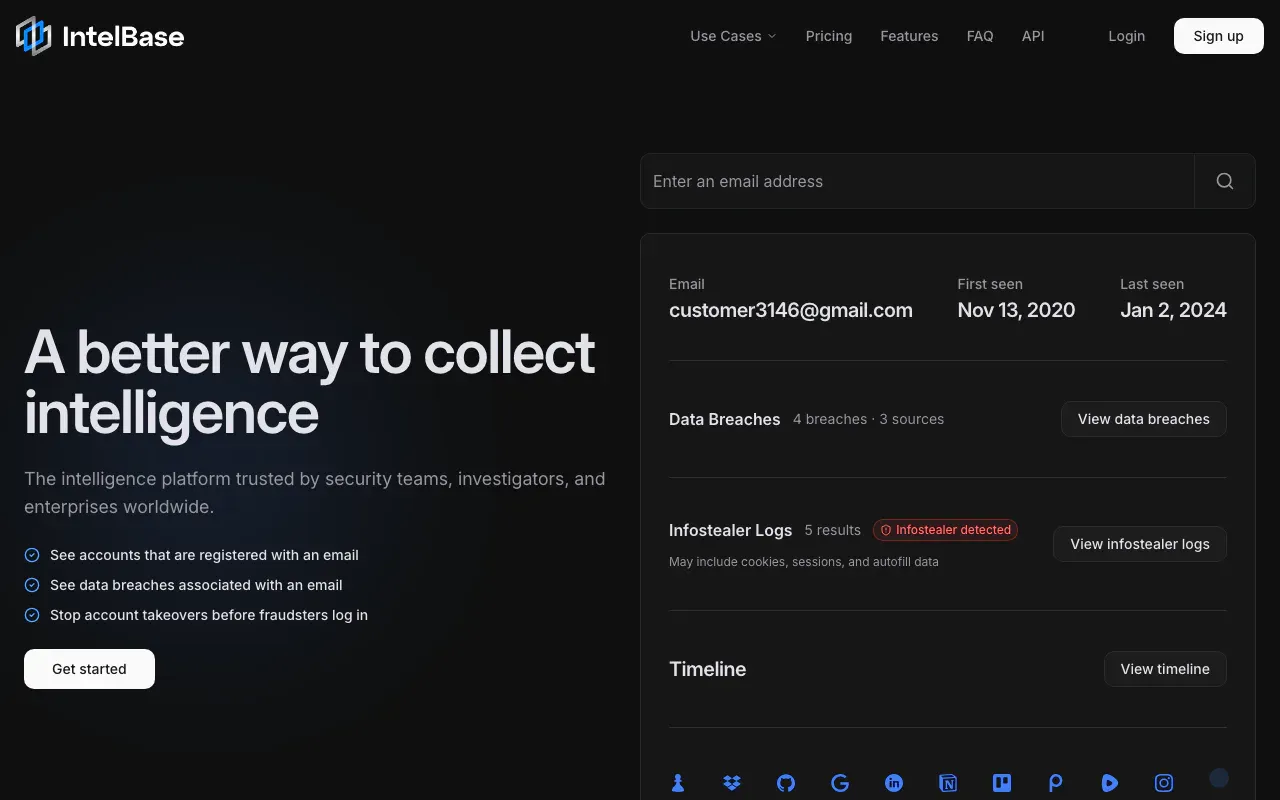
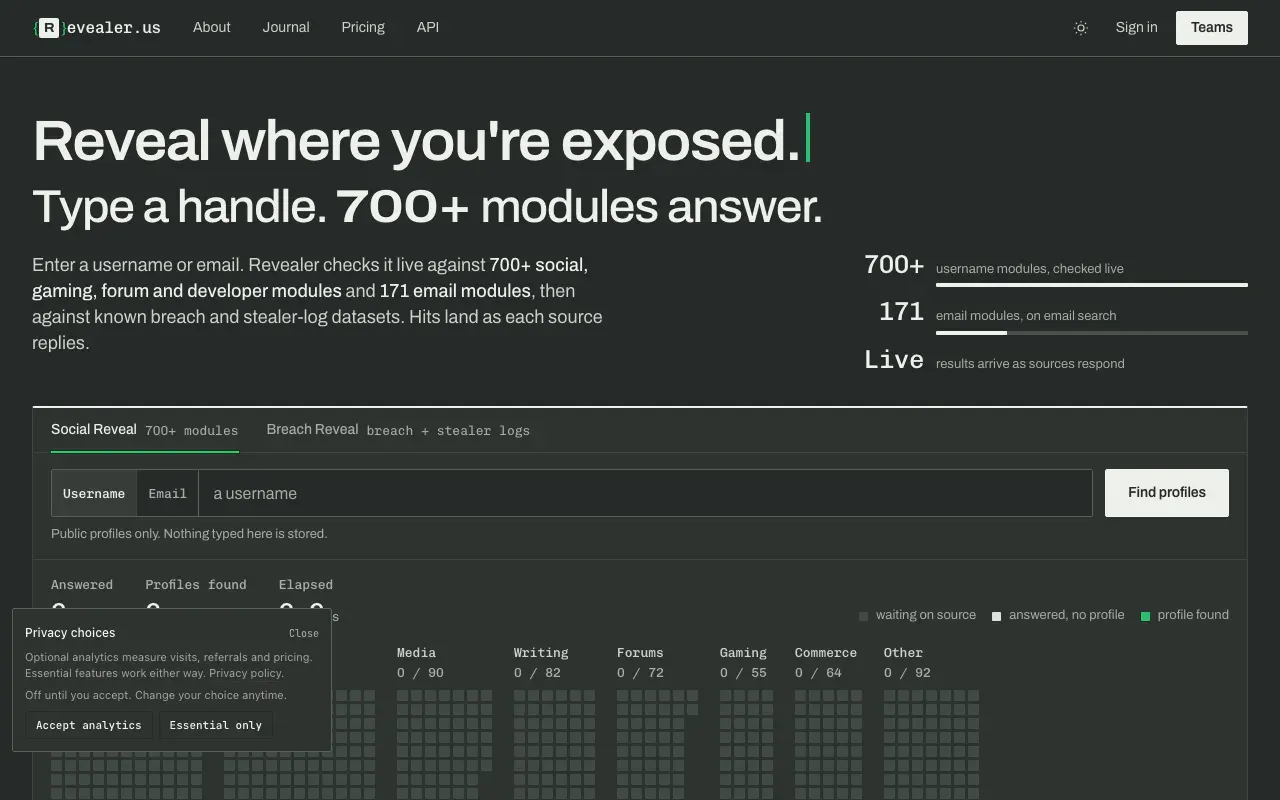
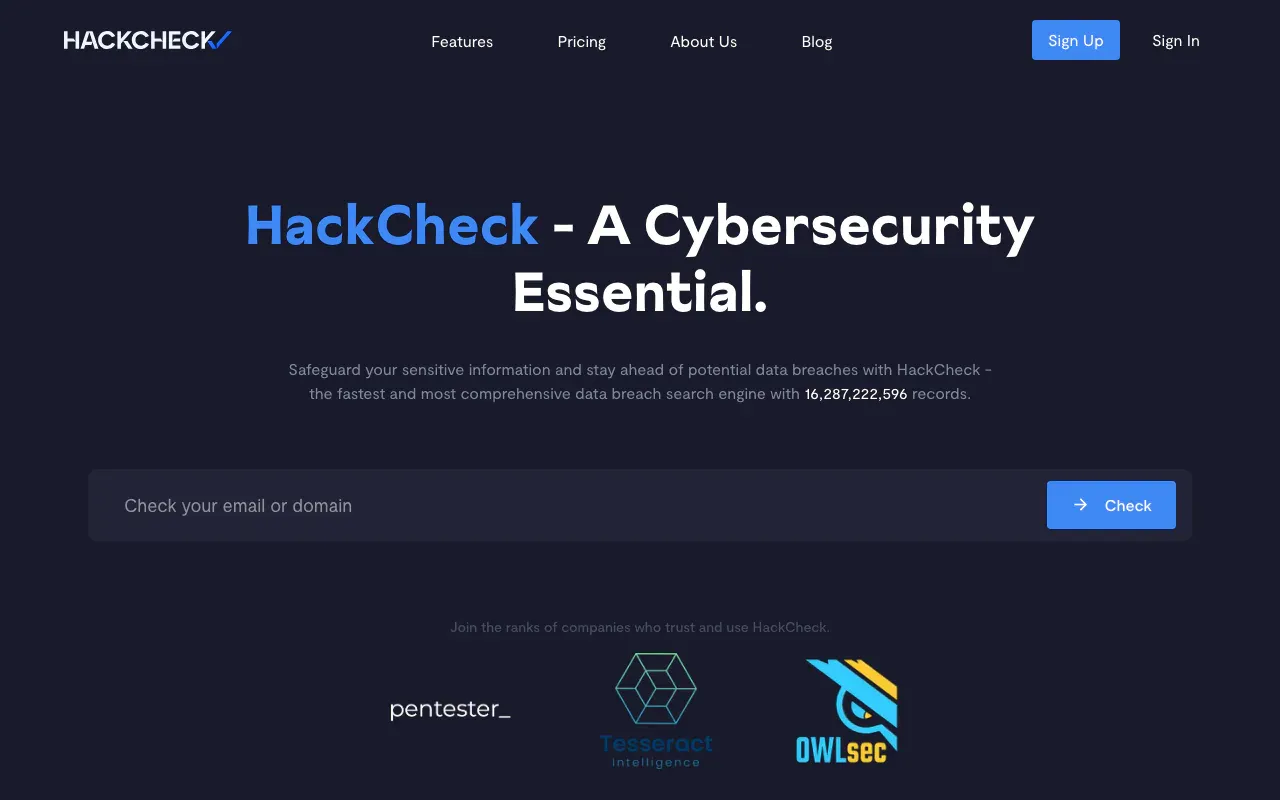
A cold email. A sender I do not recognize. A lead that might be a real person or a sockpuppet. One search is usually enough to decide whether the rest of the work is worth doing. Breach rows are part of the product on the higher plans. If I need more query types than email, or a deeper leak corpus, I still go to HackCheck or IntelBase. If I need live account coverage across hundreds of sites I go to Fingerprint.to or Revealer.US.
Individuals can claim a profile and ask to be excluded from results. The service says it only surfaces information that is already public.