Jimpl
Reads the hidden EXIF metadata in a photo, such as location, date, and camera details, and can remove it before you share the file.

- Categories
- Image and Video Analysis
- Type
- Web app
- Price
- Free
- Setup
- Easy to use
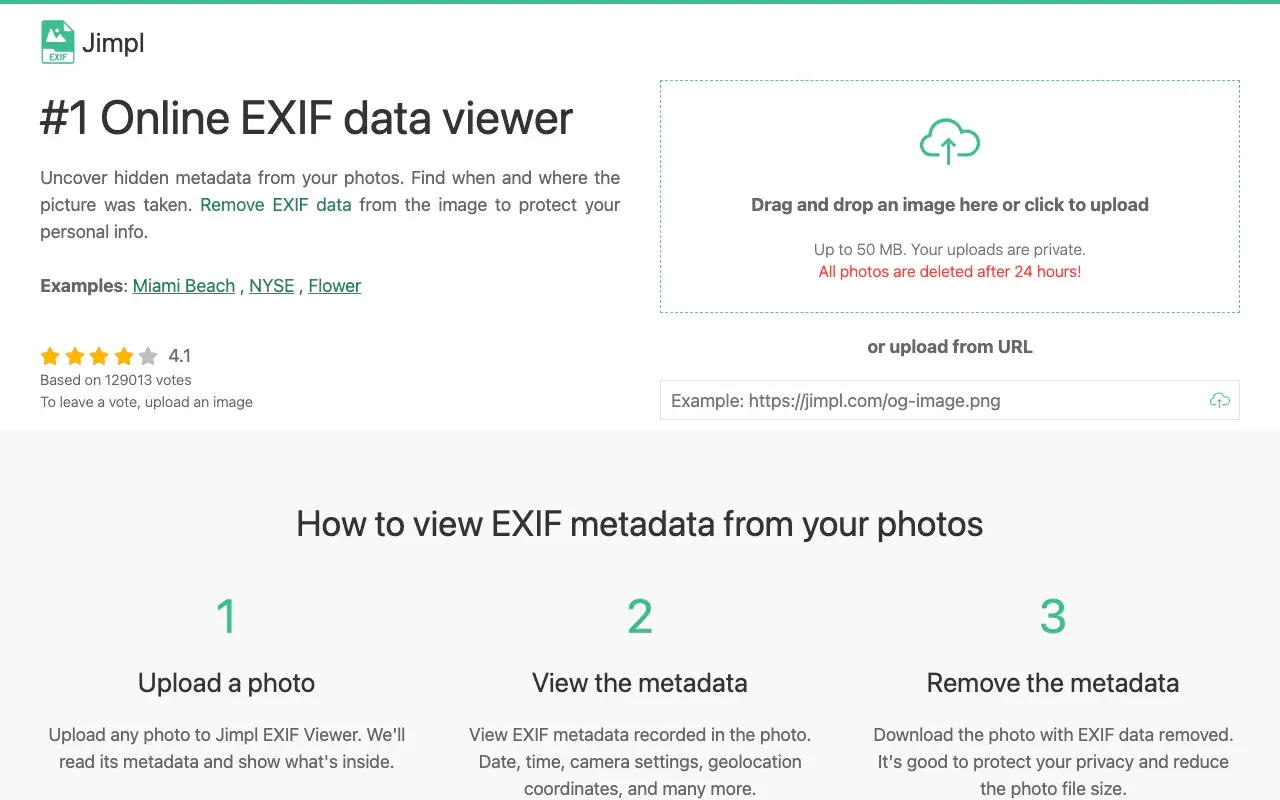
Jimpl is a browser EXIF viewer. You upload a photo. It shows the metadata the file still carries: camera make and model, lens and exposure settings, timestamps, copyright fields, and GPS if the phone left it in. You can download a copy with that metadata stripped.
It has been running since 2010. They say uploads are kept only long enough to read the file and are deleted within 24 hours. I would still not upload a photo I cannot stand leaving a server, because “we delete it” is a policy, not a physical law.
What EXIF will and will not tell you
If the GPS fields are present, you can often place the shot on a map. If they are not, you are done. Many phones can be set to stop writing location. Many apps strip it on upload. GIFs do not carry EXIF. Editors can rewrite every field. Jimpl’s own FAQ says you cannot trust the metadata to be original, and you cannot recover a blurred or cropped region from it. The pixels are the picture. EXIF is a note taped to the file.
That note is still worth reading. A shutter count, a camera serial, a timezone in the timestamp, a software tag that says the file went through Photoshop: those are leads. They are not proof the photo was taken where it claims.
When I use it
Every time I am about to share a photo I did not take, and every time a photo is evidence. It is free, it is instant, and it does one job. I still want it in the directory so people stop emailing original camera files to strangers.